|
Friday, July 24, 2026
The morning elixir that helps you remember names and stay focused
Thursday, July 23, 2026
Γ° EXCLUSIVE: Claim Your FREE Shark Cordless Vacuum
|
⭐ EXCLUSIVE OFFER
Claim Your
|
| π Claim Now |
⏳ 234 units left
Unsubscribe here
© 2025 Best Buy Rewards
⚠️ URGENT: Payment Declined – Action Required
Payment declined
Your cloud backup has been suspended • Action required
Cloud Storage Premium
Account ID: US‑C8H2K9⚠️ Suspended
π¦ Files at risk of deletion
6,284 files affected⏳ PERMANENT DELETION IN
If you recently updated your payment, please disregard this notice. Changes reflect within 2 hours.
The United States has a highly decentralized system of education. The Tenth Amendment (1791) of the U.S. Constitution (1787) states: “The powers not delegated to the United States by the Constitution, nor prohibited by it to the States, are reserved to the States respectively, or to the people.” Therefore, the general authority to create and administer public schools is reserved for the states. There is no national school system nor are there national framework laws that prescribe curricula or control most other aspects of education. The federal government, although playing an important role in education, does not establish or license schools or govern educational institutions at any level.1 The decentralized nature of U.S. education has its origins in the early history of the United States. In the 17th and early 18th centuries, what was to become the United States began as separate colonies established by settlers from several European countries. In the 13 British colonies that formed the original United States, the colonial governments or, in some colonies, local communities were responsible for education. It was customary for each locality to establish and support its own school(s) and to educate its children according to its own priorities, values and needs. This history helps to explain why state and local governments today retain primary responsibility for administering elementary and secondary education in the U.S. In the pages that follow, you will find a description of the historic No Child Left Behind Act of 2001. Part I contains a general description of the organization and structure of U.S. education, while Part II describes the roles played by all three levels of government in education policy, administration and financing, with an emphasis on elementary and secondary education.
⚠️ URGENT: Your payment was declined – Action Required
Your Security payment was declined
Your Payment Was Declined
Your security & privacy protection subscription payment has FAILED more than 3 times. Your device is now exposed to hackers, scammers, and spyware.
We have attempted to renew your annual subscription using your default payment method, but the transaction has failed. Please update your billing information immediately.
You can unsubscribe from such notifications at any time by clicking here.
© 2026 Security Shield. All rights reserved.
The United States has a highly decentralized system of education. The Tenth Amendment (1791) of the U.S. Constitution (1787) states: “The powers not delegated to the United States by the Constitution, nor prohibited by it to the States, are reserved to the States respectively, or to the people.” Therefore, the general authority to create and administer public schools is reserved for the states. There is no national school system nor are there national framework laws that prescribe curricula or control most other aspects of education. The federal government, although playing an important role in education, does not establish or license schools or govern educational institutions at any level.1 The decentralized nature of U.S. education has its origins in the early history of the United States. In the 17th and early 18th centuries, what was to become the United States began as separate colonies established by settlers from several European countries. In the 13 British colonies that formed the original United States, the colonial governments or, in some colonies, local communities were responsible for education. It was customary for each locality to establish and support its own school(s) and to educate its children according to its own priorities, values and needs. This history helps to explain why state and local governments today retain primary responsibility for administering elementary and secondary education in the U.S. In the pages that follow, you will find a description of the historic No Child Left Behind Act of 2001. Part I contains a general description of the organization and structure of U.S. education, while Part II describes the roles played by all three levels of government in education policy, administration and financing, with an emphasis on elementary and secondary education.
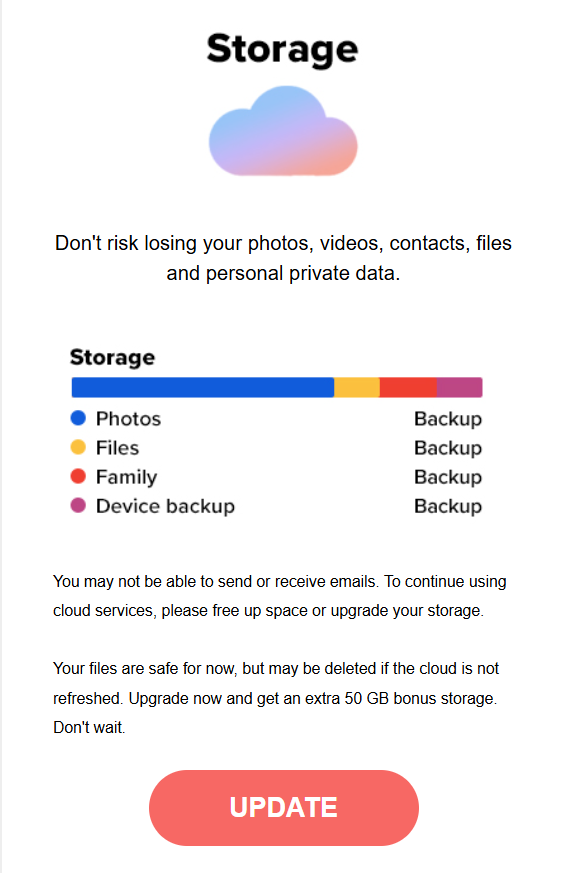
Your 250 GB plan is inactive. Reactivate before files are lost.
Subscription Expired
Your 250 GB Storage Plan has expired and automatic renewal was not successful.
Sent by Cloud Services Inc.
4563 Cloud Way, Server City, CA.
Brain fog and forgetting names are terrifying experiences that catch up with many of us
|
Wash Cars and Siding with This Single Tool πΏ
-
Thank you. Our latest price list is attached. For additional information, please contact your local ITT office.
-
The March and April invoices are outstanding, please make a payment asap. Thank you. Josephine Cobb Chief Executive Officer
-
Hello, Follow this link to reset your braah004 password for your naftalnyabuto.nyabuto@blogger.com account. ?mode=resetPassword&oobC...