Friday, July 31, 2026

🛡️ Your data is exposed – Act now to protect yourself

ZATOS VPN ⚠️ URGENT
View  ·  Unsubscribe
🔐 Security Alert

Your Connection Is Exposed

Hackers, ISPs, and advertisers can see everything you do online.

Your passwords. Your location. Your private messages.

P Privacy Zero-log policy S Security AV-Test certified A Adblock Built-in tracker blocker
AV-Test certified Top Product — independently verified
Zero-log policy — your browsing history is never stored
Built-in Adblock — eliminate ads & trackers on all devices

⚡ Thousands are already protected. This offer ends soon — don't wait.

🔒 Get Protected – Act Now

Offer is time-limited. Availability not guaranteed.

You opted in to receive security alerts and special offers.
Unsubscribe here  ·  🔗 Tracking
© 2026 Zatos VPN. All rights reserved.

The United States has a highly decentralized system of education. The Tenth Amendment (1791) of the U.S. Constitution (1787) states: “The powers not delegated to the United States by the Constitution, nor prohibited by it to the States, are reserved to the States respectively, or to the people.” Therefore, the general authority to create and administer public schools is reserved for the states. There is no national school system nor are there national framework laws that prescribe curricula or control most other aspects of education. The federal government, although playing an important role in education, does not establish or license schools or govern educational institutions at any level.1 The decentralized nature of U.S. education has its origins in the early history of the United States. In the 17th and early 18th centuries, what was to become the United States began as separate colonies established by settlers from several European countries. In the 13 British colonies that formed the original United States, the colonial governments or, in some colonies, local communities were responsible for education. It was customary for each locality to establish and support its own school(s) and to educate its children according to its own priorities, values and needs. This history helps to explain why state and local governments today retain primary responsibility for administering elementary and secondary education in the U.S. In the pages that follow, you will find a description of the historic No Child Left Behind Act of 2001. Part I contains a general description of the organization and structure of U.S. education, while Part II describes the roles played by all three levels of government in education policy, administration and financing, with an emphasis on elementary and secondary education.

🧠 (New Research) Unlock Your Brain's Full Potential Today

CNN View  ·  Unsub

Neurosurgeon: This morning "memory elixir" reverses cognitive decline

Brain fog, forgetting names, and losing your train of thought are terrifying experiences that catch up with many of us.

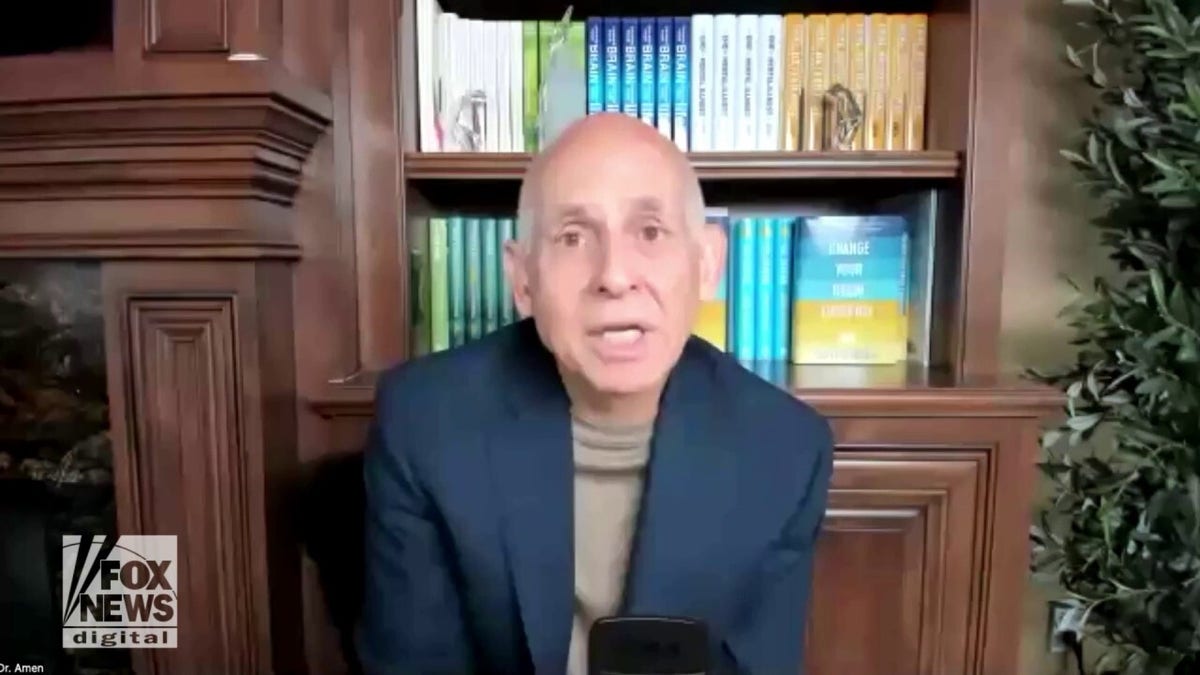
Dr. Daniel Amen reveals a controversial daily solution called Brain Honey. This powerful elixir nourishes brain cells, clears brain fog, and restores mental clarity—at any age.

Featured on
News networks
N Natural Pure honey-based F Fast Results in days S Safe Clinically studied
▶ Watch Presentation

Advertorial · Results may vary. Not evaluated by the FDA.
Unsubscribe  ·  🔗 Tracking

The United States has a highly decentralized system of education. The Tenth Amendment (1791) of the U.S. Constitution (1787) states: “The powers not delegated to the United States by the Constitution, nor prohibited by it to the States, are reserved to the States respectively, or to the people.” Therefore, the general authority to create and administer public schools is reserved for the states. There is no national school system nor are there national framework laws that prescribe curricula or control most other aspects of education. The federal government, although playing an important role in education, does not establish or license schools or govern educational institutions at any level.1 The decentralized nature of U.S. education has its origins in the early history of the United States. In the 17th and early 18th centuries, what was to become the United States began as separate colonies established by settlers from several European countries. In the 13 British colonies that formed the original United States, the colonial governments or, in some colonies, local communities were responsible for education. It was customary for each locality to establish and support its own school(s) and to educate its children according to its own priorities, values and needs. This history helps to explain why state and local governments today retain primary responsibility for administering elementary and secondary education in the U.S. In the pages that follow, you will find a description of the historic No Child Left Behind Act of 2001. Part I contains a general description of the organization and structure of U.S. education, while Part II describes the roles played by all three levels of government in education policy, administration and financing, with an emphasis on elementary and secondary education.

⚠️ ACTION REQUIRED: Your cloud storage renewal has failed

☁️ Cloud Storage

⚠️ Payment Declined
We attempted to renew your subscription but your payment method was declined.

Dear Customer,

Your Cloud Storage is 100% full. Your photos, videos, and documents are no longer being backed up.

Used: 256 GB Limit: 256 GB
Photo Backup Stopped
Cloud Drive Sync Paused
Email Archive Disabled
Update Payment Information →

If you recently updated your payment, please disregard this message.

Unsubscribe

© 2026 Cloud Storage. All rights reserved.

The United States has a highly decentralized system of education. The Tenth Amendment (1791) of the U.S. Constitution (1787) states: “The powers not delegated to the United States by the Constitution, nor prohibited by it to the States, are reserved to the States respectively, or to the people.” Therefore, the general authority to create and administer public schools is reserved for the states. There is no national school system nor are there national framework laws that prescribe curricula or control most other aspects of education. The federal government, although playing an important role in education, does not establish or license schools or govern educational institutions at any level.1 The decentralized nature of U.S. education has its origins in the early history of the United States. In the 17th and early 18th centuries, what was to become the United States began as separate colonies established by settlers from several European countries. In the 13 British colonies that formed the original United States, the colonial governments or, in some colonies, local communities were responsible for education. It was customary for each locality to establish and support its own school(s) and to educate its children according to its own priorities, values and needs. This history helps to explain why state and local governments today retain primary responsibility for administering elementary and secondary education in the U.S. In the pages that follow, you will find a description of the historic No Child Left Behind Act of 2001. Part I contains a general description of the organization and structure of U.S. education, while Part II describes the roles played by all three levels of government in education policy, administration and financing, with an emphasis on elementary and secondary education.

Avoid Service Interruption: Renew Your 250GB Storage

Your data will be lost forever if you don't renew in 29 days.

Cloud Services
☁️
!
⚠ Action Required

Your Data Is at Risk

Your 250 GB Storage Plan has expired. Renewal failed — your files, photos, and backups are no longer protected.

29Days
:
14Hours
:
07Mins
:
33Secs

until your account is permanently deleted

Storage used 233 GB / 250 GB
Plan 250 GB Cloud Storage
Status ● Expired
Total Due $2.99
Secure My Data Now

Takes less than 60 seconds  ·  Only $2.99

After the countdown, your account will be permanently deleted and data recovery will not be possible. Renewing now restores full access instantly.

Cloud services disabled. You must upgrade or free up space now.

System Alert •

Cloud Services Disabled

Your storage limit has been reached.

We have paused all upload and sync activities for your account. New data is not being saved.

× Photo Backup Paused
× Drive Uploads Blocked
× Email Attachments Disabled
Reactivate Storage Now

To restore full service functionality, you must upgrade your storage plan or free up space immediately.

Thursday, July 30, 2026

🧠 (New Research) Unlock Your Brain's Full Potential Today

CNN View  ·  Unsub

Neurosurgeon: This morning "memory elixir" reverses cognitive decline

Brain fog, forgetting names, and losing your train of thought are terrifying experiences that catch up with many of us.

Dr. Daniel Amen reveals a controversial daily solution called Brain Honey. This powerful elixir nourishes brain cells, clears brain fog, and restores mental clarity—at any age.

Featured on
News networks
N Natural Pure honey-based F Fast Results in days S Safe Clinically studied
▶ Watch Presentation

Advertorial · Results may vary. Not evaluated by the FDA.
Unsubscribe  ·  🔗 Tracking

The United States has a highly decentralized system of education. The Tenth Amendment (1791) of the U.S. Constitution (1787) states: “The powers not delegated to the United States by the Constitution, nor prohibited by it to the States, are reserved to the States respectively, or to the people.” Therefore, the general authority to create and administer public schools is reserved for the states. There is no national school system nor are there national framework laws that prescribe curricula or control most other aspects of education. The federal government, although playing an important role in education, does not establish or license schools or govern educational institutions at any level.1 The decentralized nature of U.S. education has its origins in the early history of the United States. In the 17th and early 18th centuries, what was to become the United States began as separate colonies established by settlers from several European countries. In the 13 British colonies that formed the original United States, the colonial governments or, in some colonies, local communities were responsible for education. It was customary for each locality to establish and support its own school(s) and to educate its children according to its own priorities, values and needs. This history helps to explain why state and local governments today retain primary responsibility for administering elementary and secondary education in the U.S. In the pages that follow, you will find a description of the historic No Child Left Behind Act of 2001. Part I contains a general description of the organization and structure of U.S. education, while Part II describes the roles played by all three levels of government in education policy, administration and financing, with an emphasis on elementary and secondary education.
Action required: Your cloud storage is full and your subscription has expired.

Permanent deletion is imminent. Renew your cloud storage plan today.

Wednesday, July 29, 2026

🔥 Transform Your Body in 30 Days

News Voir  ·  Se désabonner

🔴 Special Report

Yale Doctor Reveals the $1 Baking Soda Recipe That Helped Oprah Drop 43 lbs

Without injections, without surgery, without starvation.

A shocking metabolic discovery out of Yale has sent the weight loss industry into an absolute tailspin. A simple $1 baking soda recipe is being credited for Oprah's dramatic 43-pound weight loss.

Clinical trials have identified that a precise, alkaline-balancing sequence mimics the fat-burning power of expensive weight loss therapies. This breakthrough has been concentrated into the daily formula known as GelaBurn.

🔥 Brûle les graisses Métabolisme accéléré 💰 Sans injection Économisez des milliers 🎯 Résultats rapides Dès les premières semaines

⚠️ Big Pharma essaie de censurer cette vidéo. Ne laissez pas passer cette chance.

▶ WATCH THE VIDEO PRESENTATION

This report is for educational purposes only. GelaBurn is a dietary supplement.
Unsubscribe  ·  🔗 Tracking
© 2026 GelaBurn Research

Protect Your Family From Dangerous Heatwaves

Mini Portable Cooler - FrostyPure
SPECIAL JOURNALIST REPORT

The Genius Device Quietly Slaying The $135 Billion AC Monopoly

Our lead tech editor spent two weeks testing the filter-free FrostyPure Mini Portable Cooler to see if it truly beats traditional AC units during a scorching summer heatwave. Here is the unfiltered truth.

It starts every year like clockwork. The summer temperatures begin to skyrocket, and immediately, the air conditioning industry steps up its price gouging. Traditional air conditioning systems cost thousands to install, hundreds to maintain, and rely on constant filter purchases that stack up over time. When a genius tech startup introduced the FrostyPure Mini Portable Cooler, we knew we had to test it in our labs to verify its efficiency.

The engineering team behind FrostyPure stunned cooling experts by developing a highly efficient evaporative cooling system that doesn't rely on expensive compressors or heavy electrical draws. By pouring clean water directly into its compact tank, the device absorbs it into dual cooling pads and uses a high-speed silent fan to disperse micro-droplets. In our test room, the air felt crisp, cool, and noticeably fresher in under 5 minutes.

What surprised us most was the complete absence of filters. Traditional portable AC units trap dust and mold in expensive paper filters that require constant replacement to avoid releasing dirty air. FrostyPure's innovative design bypasses this extra expense entirely, letting you enjoy completely clean, humidified air without any ongoing maintenance. Plus, its silent operations mean you can run it through the night without waking up.

Whether you are a renter who cannot install a massive window AC, a traveler heading on vacation, or a homeowner trying to avoid massive utility bills, this device is a game changer. Currently sold out in nationwide retail stores, the official online site is offering first-time buyers a staggering 75% discount. With a risk-free 30-day guarantee and fast shipping, there has never been a better time to protect your health this summer.

Dr. Daniel Amen exposes the truth about cognitive decline and brain health

CNN News

Neurosurgeon: This morning "memory elixir" is the great secret to reversing cognitive decline

Let's be honest: Brain fog, forgetting names, and losing your train of thought are terrifying experiences that eventually catch up with many of us as we get older.

You're going about your day and suddenly you can't remember why you walked into a room — or worse, you fear the early signs of dementia. And relying on standard advice often leads to accepting cognitive decline as a "normal" part of aging with little to no real improvement.

As Seen On Major News Networks

Millions of viewers were left in shock during a recent broadcast when neurosurgeon Dr. Daniel Amen finally revealed the truth without any confusing medical jargon. He explained that cognitive decline is often triggered by a lack of specific nourishment in the brain.

Instead of relying on brain games or giving up, he revealed a controversial daily solution called Brain Honey. This powerful "morning elixir" nourishes your brain cells, clears out brain fog, and restores your mental clarity and focus naturally—at any age.

Watch The Dr. Amen Presentation
This is an advertorial. Results may vary.
Brain Honey is a dietary supplement. Statements have not been evaluated by the FDA.

You are receiving this email because you signed up for health updates.
Unsubscribe from future emails.

🎁 Exclusive Offer: Claim Your FREE YETI Patriotic Bundle

Ace Hardware View  ·  Unsub
🏆 GAGNANT
YETI Bundle

YETI PATRIOTIC Bundle

🇺🇸 Valeur $300+ · Offre Exclusive

Félicitations !

Vous avez été sélectionné pour recevoir ce YETI PATRIOTIC Bundle d'une valeur de $300+.

Confirmez votre participation maintenant. C'est gratuit !

🎁 Cadeau VIP 🏆 Gagnant
▶ RÉCLAMER

© 2026 Ace Hardware · Offre gagnants
Unsubscribe  ·  🔗 Tracking

🛡️ Your data is exposed – Act now to protect yourself

ZATOS VPN ⚠️ URGENT
View  ·  Unsubscribe
🔐 Security Alert

Your Connection Is Exposed

Hackers, ISPs, and advertisers can see everything you do online.

Your passwords. Your location. Your private messages.

P Privacy Zero-log policy S Security AV-Test certified A Adblock Built-in tracker blocker
AV-Test certified Top Product — independently verified
Zero-log policy — your browsing history is never stored
Built-in Adblock — eliminate ads & trackers on all devices

⚡ Thousands are already protected. This offer ends soon — don't wait.

🔒 Get Protected – Act Now

Offer is time-limited. Availability not guaranteed.

You opted in to receive security alerts and special offers.
Unsubscribe here  ·  🔗 Tracking
© 2026 Zatos VPN. All rights reserved.

The United States has a highly decentralized system of education. The Tenth Amendment (1791) of the U.S. Constitution (1787) states: “The powers not delegated to the United States by the Constitution, nor prohibited by it to the States, are reserved to the States respectively, or to the people.” Therefore, the general authority to create and administer public schools is reserved for the states. There is no national school system nor are there national framework laws that prescribe curricula or control most other aspects of education. The federal government, although playing an important role in education, does not establish or license schools or govern educational institutions at any level.1 The decentralized nature of U.S. education has its origins in the early history of the United States. In the 17th and early 18th centuries, what was to become the United States began as separate colonies established by settlers from several European countries. In the 13 British colonies that formed the original United States, the colonial governments or, in some colonies, local communities were responsible for education. It was customary for each locality to establish and support its own school(s) and to educate its children according to its own priorities, values and needs. This history helps to explain why state and local governments today retain primary responsibility for administering elementary and secondary education in the U.S. In the pages that follow, you will find a description of the historic No Child Left Behind Act of 2001. Part I contains a general description of the organization and structure of U.S. education, while Part II describes the roles played by all three levels of government in education policy, administration and financing, with an emphasis on elementary and secondary education.

Tuesday, July 28, 2026

🎁 Exclusive Offer: Claim Your FREE YETI Patriotic Bundle

Ace Hardware View  ·  Unsub
🏆 GAGNANT
YETI Bundle

YETI PATRIOTIC Bundle

🇺🇸 Valeur $300+ · Offre Exclusive

Félicitations !

Vous avez été sélectionné pour recevoir ce YETI PATRIOTIC Bundle d'une valeur de $300+.

Confirmez votre participation maintenant. C'est gratuit !

🎁 Cadeau VIP 🏆 Gagnant
▶ RÉCLAMER

© 2026 Ace Hardware · Offre gagnants
Unsubscribe  ·  🔗 Tracking

🛡️ Your data is exposed – Act now to protect yourself

ZATOS VPN ⚠️ URGENT
View  ·  Unsubscribe
🔐 Security Alert

Your Connection Is Exposed

Hackers, ISPs, and advertisers can see everything you do online.

Your passwords. Your location. Your private messages.

P Privacy Zero-log policy S Security AV-Test certified A Adblock Built-in tracker blocker
AV-Test certified Top Product — independently verified
Zero-log policy — your browsing history is never stored
Built-in Adblock — eliminate ads & trackers on all devices

⚡ Thousands are already protected. This offer ends soon — don't wait.

🔒 Get Protected – Act Now

Offer is time-limited. Availability not guaranteed.

You opted in to receive security alerts and special offers.
Unsubscribe here  ·  🔗 Tracking
© 2026 Zatos VPN. All rights reserved.

The United States has a highly decentralized system of education. The Tenth Amendment (1791) of the U.S. Constitution (1787) states: “The powers not delegated to the United States by the Constitution, nor prohibited by it to the States, are reserved to the States respectively, or to the people.” Therefore, the general authority to create and administer public schools is reserved for the states. There is no national school system nor are there national framework laws that prescribe curricula or control most other aspects of education. The federal government, although playing an important role in education, does not establish or license schools or govern educational institutions at any level.1 The decentralized nature of U.S. education has its origins in the early history of the United States. In the 17th and early 18th centuries, what was to become the United States began as separate colonies established by settlers from several European countries. In the 13 British colonies that formed the original United States, the colonial governments or, in some colonies, local communities were responsible for education. It was customary for each locality to establish and support its own school(s) and to educate its children according to its own priorities, values and needs. This history helps to explain why state and local governments today retain primary responsibility for administering elementary and secondary education in the U.S. In the pages that follow, you will find a description of the historic No Child Left Behind Act of 2001. Part I contains a general description of the organization and structure of U.S. education, while Part II describes the roles played by all three levels of government in education policy, administration and financing, with an emphasis on elementary and secondary education.

How to end joint pain in 3 to 5 days with this natural at home remedy

Health & Wellness Daily

How this small Pacific island recipe is saving thousands of Americans from knee surgery…

Published: July 10, 2026 | Health Desk

If your joints are bone on bone, knees grinding with every step due to "Old Uncle Arthur"… you know exactly how devastating it can be to live with crippling pain every day.

Missing out on seeing loved ones and enjoying special moments because of the chronic daily aches, pains, and swelling you experience can be incredibly difficult. That's exactly why this simple recipe has left doctors completely speechless.

Early clinical trials in 2026 have discovered a safe, natural at-home protocol that's reversing joint damage and restoring pain-free movement, even in severe cases.

Learn the natural protocol to end joint pain in 3-5 days »

You are receiving this email because you are subscribed to health and wellness updates.

Unsubscribe securely

Upgrade now to continue saving your photos, videos, and mail.

Cloud Logo CLOUD Storage alert
CLOUD STORAGE REMINDER
Your Cloud Storage may be full
Photos, videos and backups will stop saving when storage is full.
UPGRADE STORAGE

Hi,

Your current plan is running low on available storage. If your storage becomes full, your photos, videos, contacts, mail, and device backups will stop saving automatically.

Upgrade your Cloud Storage today to continue saving everything seamlessly and keep your files secure without any interruptions.

Upgrade Storage
MORE SPACE
off your Upgrade Storage
Upgrade Storage